
When travelers think of Japanese art, they might picture Hokusai’s The Great Wave off Kanagawa, or Osamu Tezuka’s Atom Boy manga world or even maybe the extreme blood splatter movies. But just a 30-minute train ride east of Kyoto Station—across the mountains into Shiga Prefecture—lies a quiet artistic sanctuary that most international visitors completely miss.
Sitting along the scenic banks of the Seta River in Otsu is Roka Sensuisō (芦花浅水荘), the preserved estate and former retreat of artist Yamamoto Shunkyō (1872–1933).
Shunkyō was one of the titans of modern Nihonga (Japanese-style painting). While most of his contemporaries stayed inside to create, Shunkyō was scaling alpine peaks with heavy camera gear, pioneering a bold hybrid style that fused traditional Japanese powder based pigmented ink with Western light and perspective.
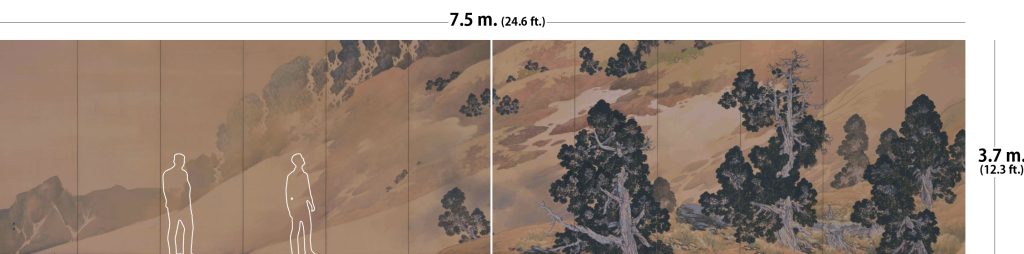
To see his finished screens, you go to a museum. But to understand how he saw the world, you step onto the glass-framed verandas of his villa in Shiga. Here is why this hidden gem belongs on your itinerary if you want to discover Japanese art beyond the traditional Kyoto tourist path.
Bridging East and West
In the early 20th century, Japanese painters faced a dilemma: how to embrace Western realism without abandoning traditional heritage. Shunkyō conquered this challenge by pairing traditional mineral pigments (iwa-enogu) with Western linear perspective, three-dimensional volume, and dramatic atmospheric light.
Roka Sensuisō—designated a National Important Cultural Property—is the architectural equivalent of Shunkyō’s art. He combined classic Sukiya-style timber construction and rustic teahouses with modern glass sliding doors. Sitting on the tatami inside, those glass panels frame the Seta River and garden so precisely that the outdoor world becomes a three-dimensional, changing landscape scroll.
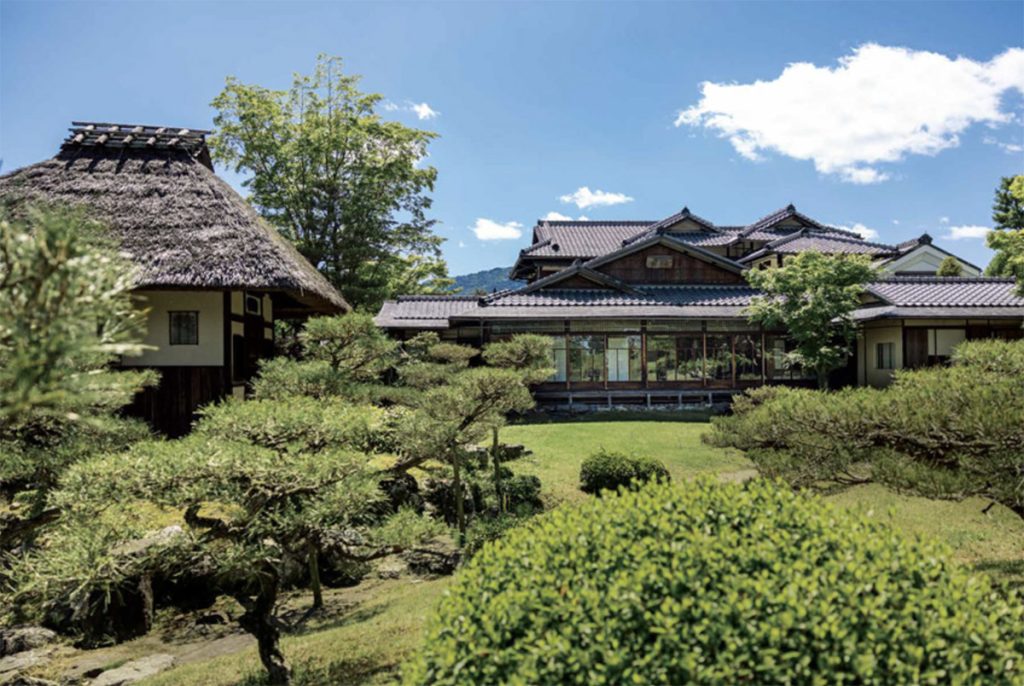
The Mountain Climber with a Camera
Long before digital cameras or easy transportation, Shunkyō was an avid mountain climber and an early adopter of photography. He hauled heavy glass-plate cameras up high peaks to capture the exact contours of rocks, shifting mists, and glints of alpine sunlight—using photo-referential studies to bring unprecedented crisp realism to Japanese art.
Shunkyō did not choose his retreat’s location at random. He built Roka Sensuisō in Otsu specifically for its water and atmospheric conditions. Positioned where Lake Biwa flows into the Seta River, the site is famous for morning mists, river currents, and shifting light. Walking through his garden or standing on the riverbank lets you experience the exact open-air studio that inspired his palette over a century ago.
A Sanctuary for Kyoto’s Avant-Garde
As a distinguished professor at the Kyoto Municipal Special School of Painting, Shunkyō was a central figure in Japanese art education. But away from urban politics and academic stress, his Shiga home was his private sanctuary.
Visiting Roka Sensuisō offers a rare, tranquil contrast to Kyoto’s crowded tourist hubs, it isn’t trying to impress you the way a museum does. It’s not asking for your attention — it’s asking you to slow down enough to notice what’s already there: the exact angle of light Shunkyō spent a lifetime chasing, still falling on the same river, through the same glass, a hundred years later. That’s the quieter kind of discovery Shiga tends to reward — not spectacle, but the sense that something has been hiding in plain sight the whole time, waiting for someone to actually look.
If this villa has put you in the mood to slow down and look closer, Otsu has more of that spirit close by. A short walk from Biwako-Hamaotsu station, Imprint Japan runs small, unhurried workshops built on the same idea — that meaning hides in plain sight in ordinary things, whether that’s a single kanji character, or the manhole cover under your feet. Print one by hand onto furoshiki cloth, and take home the story that comes with it. Email us if you want to have a guided visit of Shunkyo Yamamoto’s House in English; we can offer a house visit & workshop combo.
Leave a Reply