J.S. Mayrand

  • Alpine Artist Builds Stunning Sukiya-Style House

    When travelers think of Japanese art, they might picture Hokusai’s The Great Wave off Kanagawa, or Osamu Tezuka’s Atom Boy manga world or even maybe the extreme blood splatter movies. But just a 30-minute train ride east of Kyoto Station—across the mountains into Shiga Prefecture—lies a quiet artistic sanctuary that most international visitors completely miss.

    Sitting along the scenic banks of the Seta River in Otsu is Roka Sensuisō (芦花浅水荘), the preserved estate and former retreat of artist Yamamoto Shunkyō (1872–1933).

    Shunkyō was one of the titans of modern Nihonga (Japanese-style painting). While most of his contemporaries stayed inside to create, Shunkyō was scaling alpine peaks with heavy camera gear, pioneering a bold hybrid style that fused traditional Japanese powder based pigmented ink with Western light and perspective.
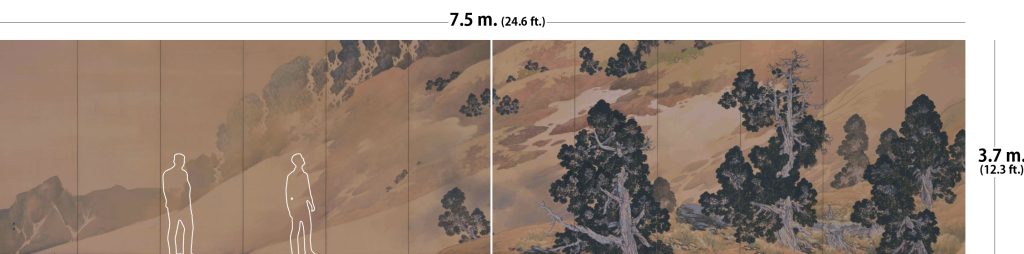
    Source: Shiga Museum Website

    To see his finished screens, you go to a museum. But to understand how he saw the world, you step onto the glass-framed verandas of his villa in Shiga. Here is why this hidden gem belongs on your itinerary if you want to discover Japanese art beyond the traditional Kyoto tourist path.

    Bridging East and West

    In the early 20th century, Japanese painters faced a dilemma: how to embrace Western realism without abandoning traditional heritage. Shunkyō conquered this challenge by pairing traditional mineral pigments (iwa-enogu) with Western linear perspective, three-dimensional volume, and dramatic atmospheric light.

    Roka Sensuisō—designated a National Important Cultural Property—is the architectural equivalent of Shunkyō’s art. He combined classic Sukiya-style timber construction and rustic teahouses with modern glass sliding doors. Sitting on the tatami inside, those glass panels frame the Seta River and garden so precisely that the outdoor world becomes a three-dimensional, changing landscape scroll.
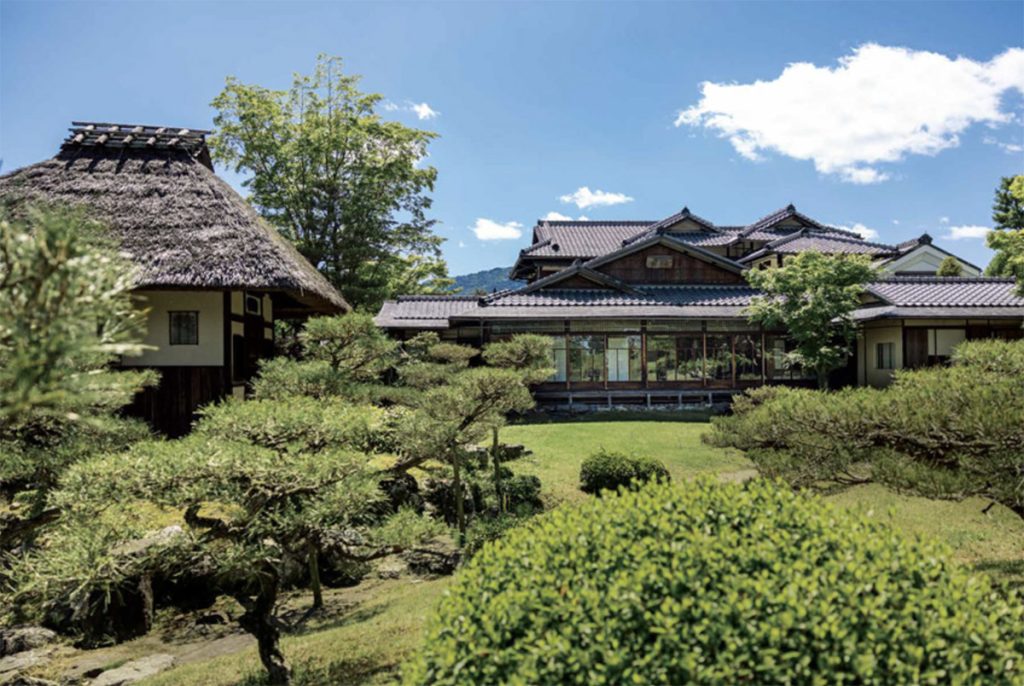
    Source: 大和ハウス工業 / 特集 蘆花浅水荘(ろかせんすいそう) 巨匠が描いた湖畔の別邸

    The Mountain Climber with a Camera

    Long before digital cameras or easy transportation, Shunkyō was an avid mountain climber and an early adopter of photography. He hauled heavy glass-plate cameras up high peaks to capture the exact contours of rocks, shifting mists, and glints of alpine sunlight—using photo-referential studies to bring unprecedented crisp realism to Japanese art.

    Shunkyō did not choose his retreat’s location at random. He built Roka Sensuisō in Otsu specifically for its water and atmospheric conditions. Positioned where Lake Biwa flows into the Seta River, the site is famous for morning mists, river currents, and shifting light. Walking through his garden or standing on the riverbank lets you experience the exact open-air studio that inspired his palette over a century ago.

    A Sanctuary for Kyoto’s Avant-Garde

    As a distinguished professor at the Kyoto Municipal Special School of Painting, Shunkyō was a central figure in Japanese art education. But away from urban politics and academic stress, his Shiga home was his private sanctuary.

    Visiting Roka Sensuisō offers a rare, tranquil contrast to Kyoto’s crowded tourist hubs, it isn’t trying to impress you the way a museum does. It’s not asking for your attention — it’s asking you to slow down enough to notice what’s already there: the exact angle of light Shunkyō spent a lifetime chasing, still falling on the same river, through the same glass, a hundred years later. That’s the quieter kind of discovery Shiga tends to reward — not spectacle, but the sense that something has been hiding in plain sight the whole time, waiting for someone to actually look.


    If this villa has put you in the mood to slow down and look closer, Otsu has more of that spirit close by. A short walk from Biwako-Hamaotsu station, Imprint Japan runs small, unhurried workshops built on the same idea — that meaning hides in plain sight in ordinary things, whether that’s a single kanji character, or the manhole cover under your feet. Print one by hand onto furoshiki cloth, and take home the story that comes with it. Email us if you want to have a guided visit of Shunkyo Yamamoto’s House in English; we can offer a house visit & workshop combo.
  • Finding Ki – Beyond the “Vibe”

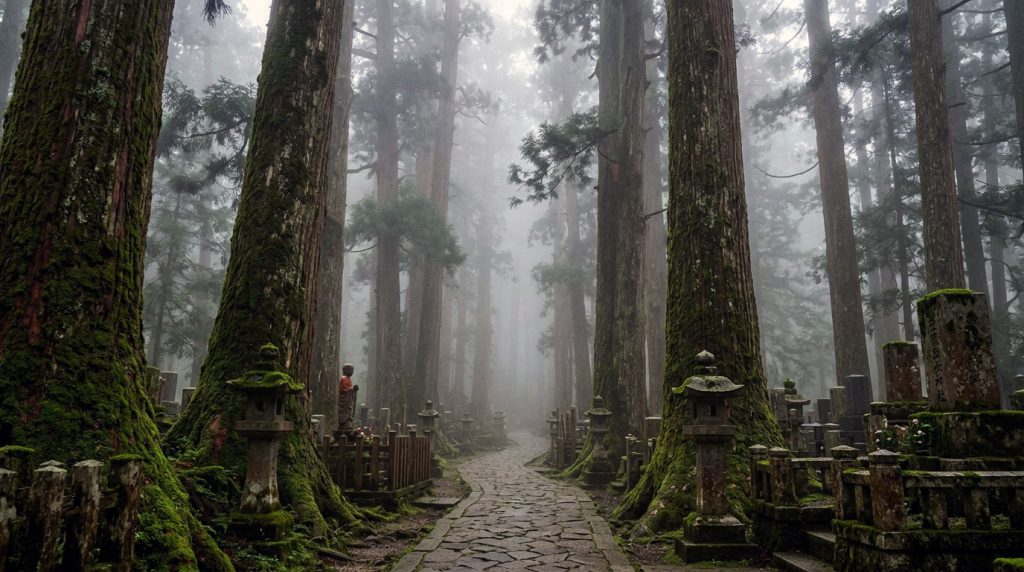
    I remember standing early one morning among the towering, moss-draped cedars of Mount Kōya, and feeling something in the air before I could even name it. It wasn’t just the dampness or the cold. It was a quiet, heavy stillness — a presence hanging between the ancient tombstones and the filtered canopy above, something that made me feel small in a good way, like I’d walked into a layer of history that was already there long before I showed up.

    Travelers often reach for modern slang to describe a feeling like this — “vibe,” “energy.” But Japanese culture mapped this exact invisible world thousands of years ago, in a single character: Ki 気.

    To understand Ki is to unlock a new lens for experiencing Japan — one that turns you from a passive person staring at scenery into someone actively relating to the landscape around you.

    The Breath of the Cosmos Meets the Grain of the Earth

    In modern Japanese, you’ll see Ki written simply as 気. But look closely at old shrine banners or martial arts scrolls, and you’ll find its original form: 氣. For Shirakawa Shizuka, the original character reveals two distinct, natural forces coming together:

    [ 气 ]   Celestial Breath / Vapor (The Unseen Atmosphere)

       +

    [ 米 ]   Rice / Physical Grain (The Earthly Anchor)

       =

    [ 氣 ]   KI: Life Energy Born at the Intersection

    Most Western ideas of “energy” picture raw force — sunlight, lightning, fire. The ancient Sino-Japanese worldview framed it differently: as a relationship. Ki is what happens when the ethereal, celestial mist 气 descends and anchors itself inside physical nourishment 米. You don’t possess energy. It creates itself in the gap between the sky and the earth.

    Grounding the Air: From High Temples to Simple Meals

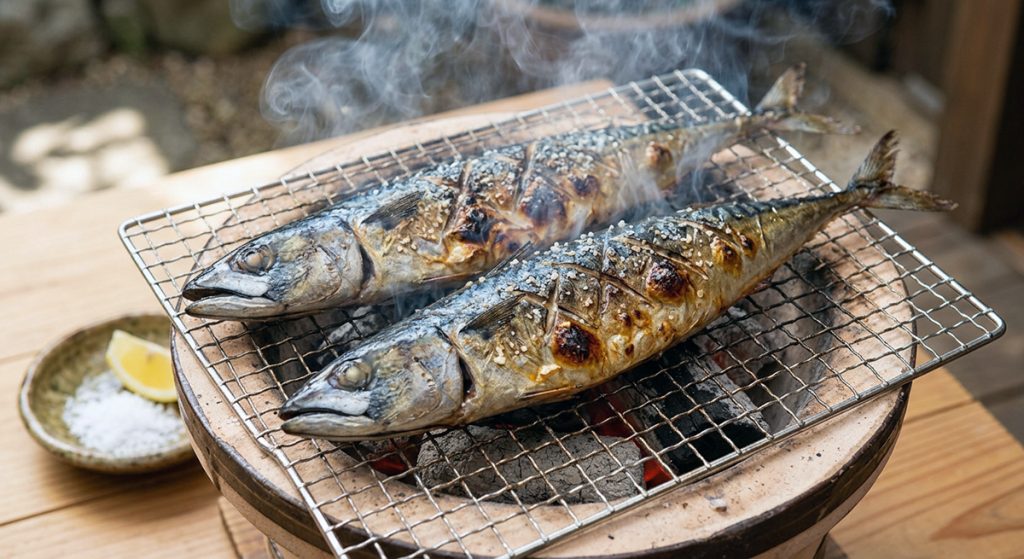
    This cosmic dynamic isn’t in any textbooks. It plays out in ordinary moments, every day, if you slow down enough to notice it. Take the simple act of eating. Buddhist tradition teaches that when you slow your internal engine down, you stop treating food as fuel and start experiencing its actual ki. I think about this every time I have salt-grilled mackerel — saba — cooked slow over charcoal with barely any seasoning.

    Honestly, it’s one of the only foods I’d happily eat every single day for the rest of my life. The fat, the crisp skin, the depth of it — eaten with attention, a meal like that stops being routine and becomes something that grounds you, reconnecting your body to the moment you’re actually in.

    The Cost of Over-Optimization

    When Japan modernized its writing system after World War II, scholars simplified the traditional 氣 into 気, swapping the rice radical 米 for a quicker two-stroke mark, メ, to make the character faster to write.

    It was a practical choice for a faster-moving world. But just like you and me, when we rush to optimize, we tend to leave things behind. Just as writing a character in two strokes instead of six strips away part of its story, rushing through a temple, eating a meal on the move, or checking sights off a list can strip away the experience itself. Doesn’t it?

    The old character 氣 is a reminder that the richest moments need time to actually digest. They ask you to slow down enough for the invisible mist to meet the solid earth.

    A Shift in Perception for Your Journey

    Next time you’re sitting in a café in Tokyo, or watching the Shiga countryside slide past a train window, try something small: don’t just look at the landscape like it’s a picture frame. Notice the threads connecting you to it. Whether it’s an old pine tree, locals bowing at a shrine gate, or a wooden ema plate swinging slightly in the wind, remember — everything in front of you is a relationship, waiting to be felt rather than photographed.

    You don’t need to go looking for “spiritual energy.” It’s already hanging in the morning mist, resting in a bowl of warm rice, and sitting quietly in the space between your own breath and the world around you. When do you slow down to notice it?


    If this is the kind of thing that pulls at you, the Kanji Printing Workshop builds around exactly this idea — choosing a character that means something to you, and slow down long enough to actually understand why.

  • The Bureaucrats Who Turned Manholes Into Art

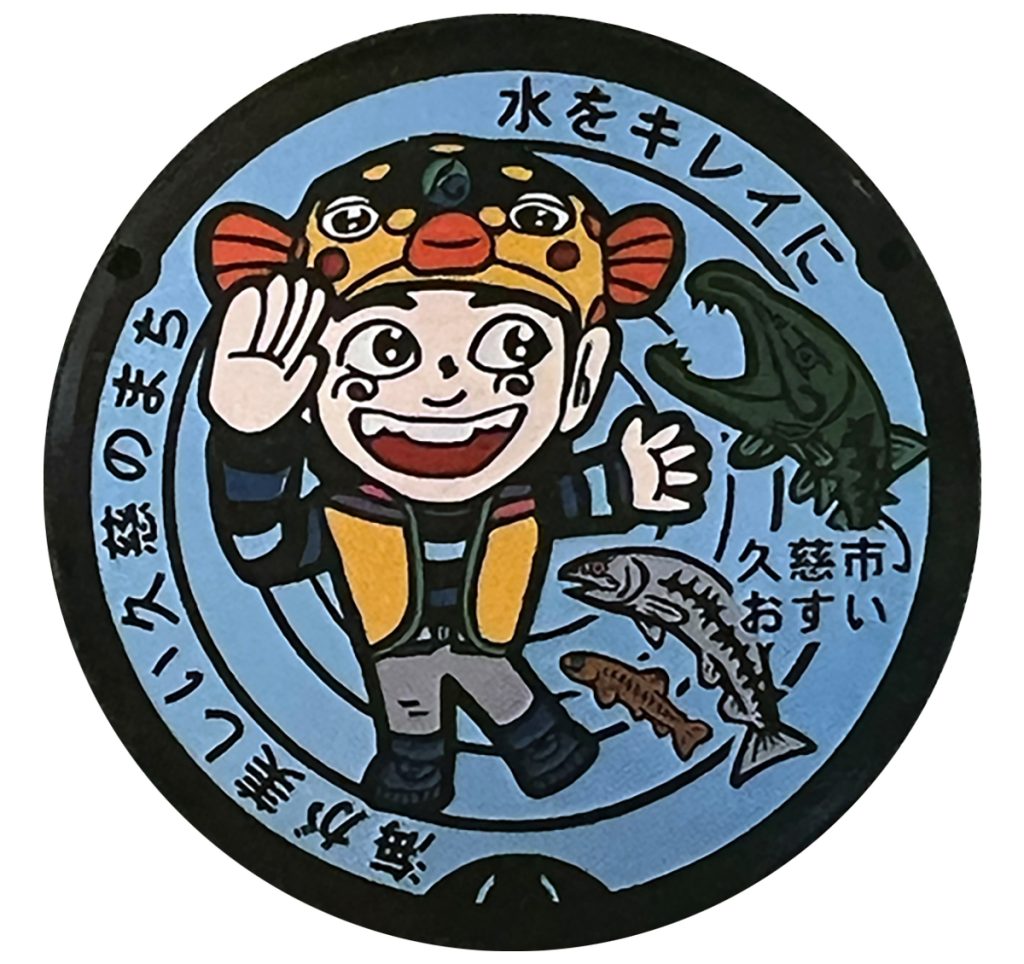
    Nobody sets out to make sewer infrastructure beautiful. And yet, sometime in the mid-1980s, a handful of Japanese government officials decided that’s exactly what needed to happen. In doing so, they accidentally created one of the country’s most beloved design phenomena.

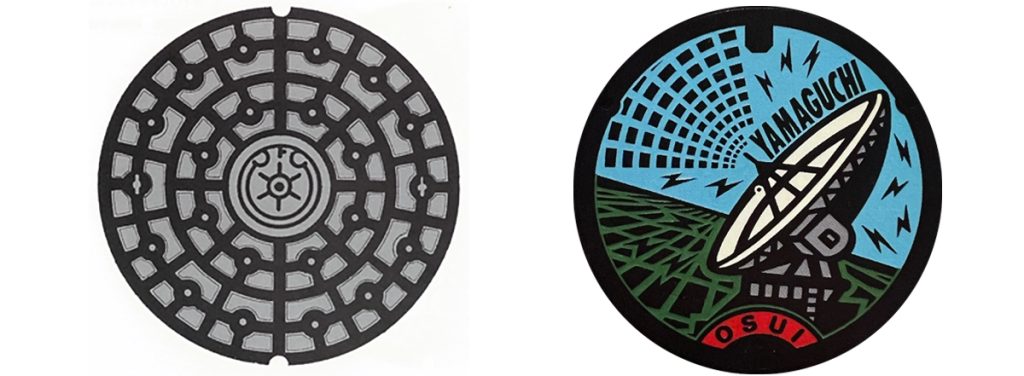
    For most of the twentieth century, Japanese manhole covers looked like manhole covers everywhere else. Functional grids. Simple circular patterns. A city crest, if you were lucky. Nobody looked twice. That was the point.

    Before 1970s (left: “Tokyo type” JMC); after 1990s onward (right: a 1991 Yamaguchi prefecture JMC).

    An Idea Born From a PR Problem

    In 1986, a Ministry of Construction official named Itaru Nakamoto said something that quietly changed the streets of Japan forever. Sewerage systems, he argued, were expensive, invisible, and hard to get public support for. So if you wanted more of the country connected to modern sanitation, you needed residents to actually feel something about the infrastructure buried under their feet. His idea: make the one visible part — the cover — worth looking at.

    Around the same time, a ministry bureaucrat named Yasutake Kameda picked up the idea and ran with it. He recognized that the manhole cover was the single most visible piece of a sewerage system anyone would ever see. He pushed for covers designed around local identity — a town’s history, its industry, its symbols — rather than generic government-issue patterns. His formal proposal, around 1984–85, is generally credited as the spark.

    A Competition That Sparked a Nationwide Trend

    What happened next is the part that still surprises people. In December 1986, the government ran a nationwide design competition and selected twenty original cover patterns. The following year, a ministry publication called Manhole Cover Expressions showcased eighty more. A popular book by design writer Joji Hayashi added fuel. Manufacturers, sensing a trend, started actively promoting custom designs. Municipalities didn’t want to be the one town stuck with a boring cover while the next town over had something to brag about — so they jumped in fast.

    It worked, and not just artistically. Japan’s sewerage penetration rate — the percentage of the country actually connected to modern sanitation — went from 26% in 1977 to 57% by 1997, and eventually to over 96% by 2010. By 2008, roughly 95% of the country’s 1,780 municipalities had adopted a locally themed cover design. A PR strategy aimed at getting people to care about pipes had, almost as a side effect, turned an entire nation’s streets into a quiet, decentralized art gallery.

    What’s Actually on These Things

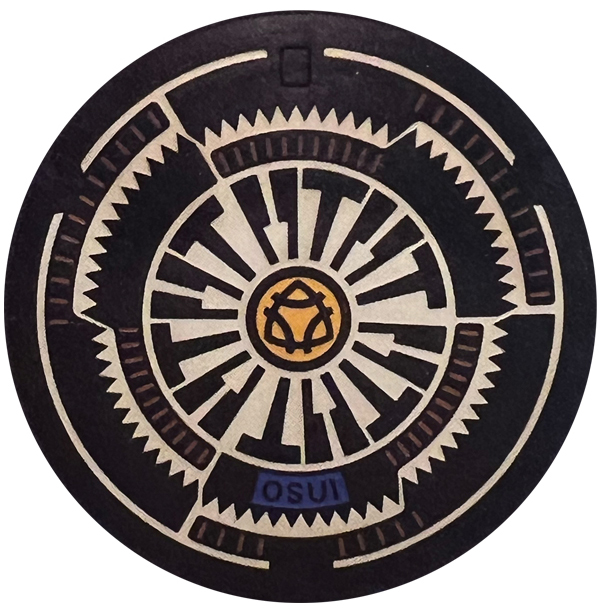
    Once cities started designing their own covers, the results got wonderfully specific.

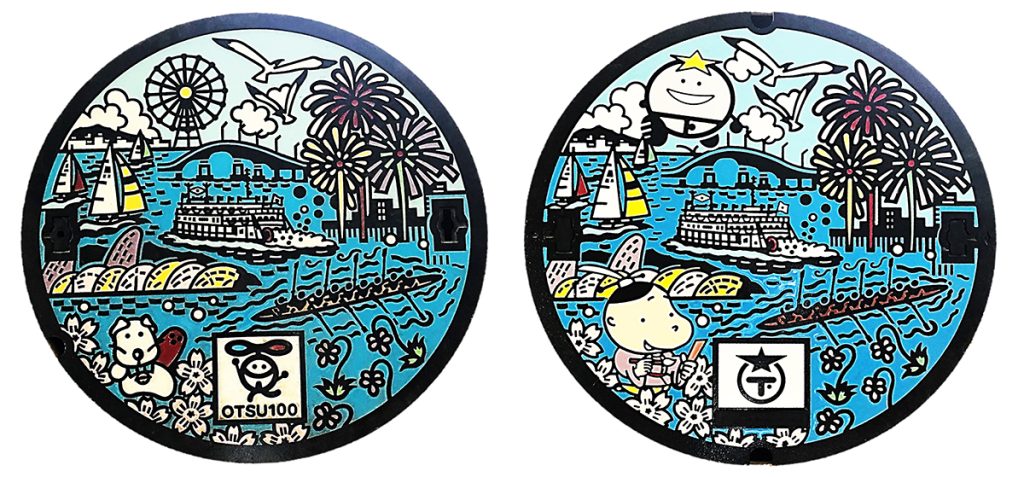
    Otsu City, right next to Kyoto, has several designs. Below is the 2015 redesign, made to commemorate the 100th anniversary of the city’s 1898 incorporation. Set against the backdrop of Lake Biwa — Japan’s largest lake — the cover features Otsu City’s official flower, tree, and bird: the Eizan Violet, Yamazakura, and Black-headed Gull. It also shows the steamship called “Michigan.” The vibrant design includes two city mascots, “Otsu Hikaru-kun” and “Hall Manzo.” The fireworks bursting over the lake are inspired by the Lake Biwa Grand Fireworks Festival, a summer tradition in Otsu. The fireworks make the most of Lake Biwa’s setting, and they’re well worth seeing.

    Otsu City’s 100th Anniversary Commemorative Plates: On the left is the 1998 JMC and on the right is the 2015 Renewal one.

    In Miki, a small town in Hyogo Prefecture, the cover tells a different story. The town has a centuries-old reputation for metalworking and woodworking, tracing back to tax exemptions granted after a 16th-century battle. Its cover shows saws, knives, and hammers arranged in tight sets of three — a quiet nod to the first character of the town’s own name, 三木, which literally means “three trees.”

    Neither cover explains itself. You just have to know — or have someone tell you.

    Miki Town JMC: saws, knives, and hammers, echoing the town’s own name and blacksmith’s past.

    These covers don’t explain themselves. You just have to know — or have someone tell you.

    Why this is more than trivia

    What strikes me most, researching this, isn’t the artistry. It’s the intent behind it. A government worked out, decades before “brand storytelling” was a phrase anyone used, that people don’t fall in love with infrastructure. They fall in love with meaning. Give a town’s history a physical form small enough to step on, and people will actually stop, look down, and notice.

    That’s the same instinct behind everything I do in the manhole cover workshop: the most overlooked things usually have the richest stories, if you’re willing to look closer.


    Want to see this design language up close?

    Come print your own piece of it.


    This article draws directly from my own peer-reviewed research — if you want to dig deeper